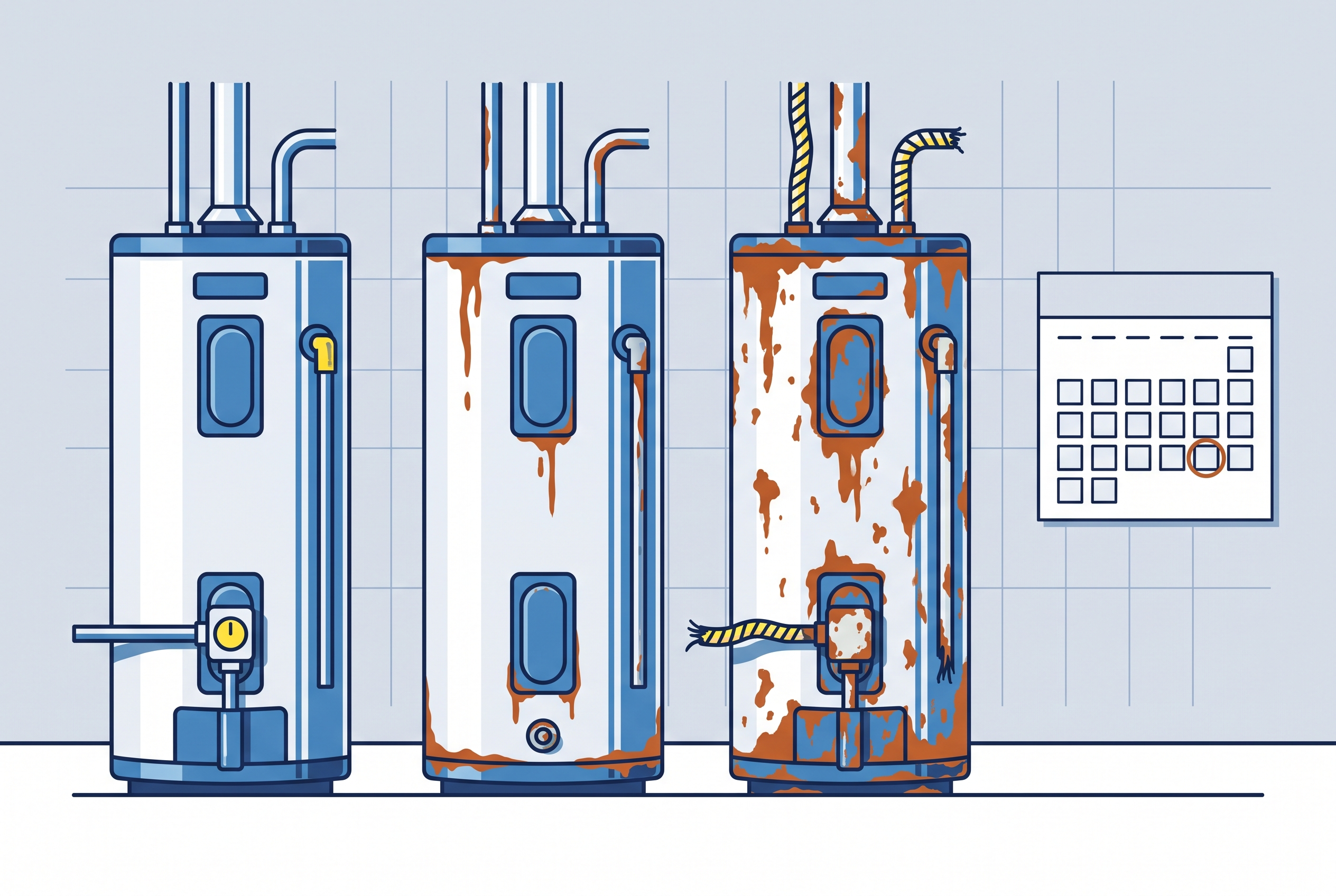
According to the U.S. Department of Energy, a conventional tank water heater typically lasts 10 to 15 years, and a tankless water heater about 20 years. Where yours lands in that range depends mostly on your water quality, the temperature setting, and whether it has been maintained. The most common way a tank dies is rust: once the inside corrodes through, it leaks and has to be replaced.
The Nebraska Energy Office puts the average at about 13 years, noting that some fail in two or three years while others last around 20.

How to find out how old your water heater is
Look at the rating plate on the side of the tank. The manufacture date is usually printed on it or encoded in the serial number. Many manufacturers put the year and month in the first few characters of the serial; the manufacturer’s website or customer service can decode it. Installation paperwork or a date written on the tank by the installer also helps.
What wears a water heater out
- Corrosion. A steel tank is protected by a glass lining and a sacrificial anode rod. When the anode is used up, the tank itself starts to rust.
- Sediment. Heating water releases minerals that settle on the bottom. The Nebraska Energy Office notes that this layer reduces heat transfer and can overheat and weaken the bottom of the tank. It’s also what causes popping and rumbling noises.
- High temperature settings. Hotter water speeds up both sediment buildup and corrosion. The CPSC recommends 120°F, which also reduces scald risk.
- Hard water and heavy use. More hot water through the tank means more minerals and more wear.
- Corrosive air. Chemicals such as chlorine products stored near a gas water heater can damage its burner and flue.
How to make it last longer
- Check the anode rod regularly and replace it when it’s worn.
- Drain or flush sediment as the manufacturer recommends. The Nebraska Energy Office suggests draining annually.
- Keep the temperature moderate, around 120°F.
- Fix small leaks at fittings promptly so they don’t rust the outside of the tank.
- Test the temperature and pressure relief valve as the manual describes, or have it checked during service.
Signs it’s time to replace it
- Water leaking from the tank itself. A leak from the tank body, rather than a fitting or valve, can’t be repaired. See water heater leaking from the bottom.
- Rusty hot water or rust on the tank, especially around the bottom.
- Loud rumbling that flushing doesn’t fix.
- Age plus repairs. A tank at the end of its typical range that needs a significant repair is often better replaced.
If you’re replacing, it’s worth considering whether a more efficient model fits your home. Our guide to tank vs. tankless water heaters compares the two.
What you can do yourself vs. when to call a pro
| Safe for most homeowners | Call a plumber |
|---|---|
| Find the age on the rating plate | A leaking tank |
| Set the temperature to about 120°F | Anode replacement if the rod is stuck |
| Flush the tank, following the manual | A relief valve that drips or won’t reseat |
| Keep chemicals and clutter away from the heater | Replacement and any gas or venting work |
Safety first. Water from a tank drain or relief valve can be scalding. Turn off the power or set the gas control to Pilot before draining, and never cap or plug a relief valve. A water heater replacement involves gas, electrical and venting connections and usually requires a permit, so it’s a job for a licensed professional.
Frequently asked questions
Should I replace my water heater before it fails?
Many homeowners plan a replacement once a tank is near the end of its typical range, especially if it sits where a leak would cause damage. A failing tank can leak a lot of water quickly.
Do gas and electric tanks last the same?
Both fall within the same general range. Water quality and maintenance usually matter more than fuel type.
Why do tankless water heaters last longer?
They don’t hold a tank of water that slowly corrodes. They still need regular maintenance, such as descaling in hard-water areas.
Sources
- U.S. Department of Energy, Which Water Heater Is Right for You?
- Nebraska Energy Office, Five Simple Steps (water heater maintenance)
- U.S. Consumer Product Safety Commission, Avoiding Tap Water Scalds