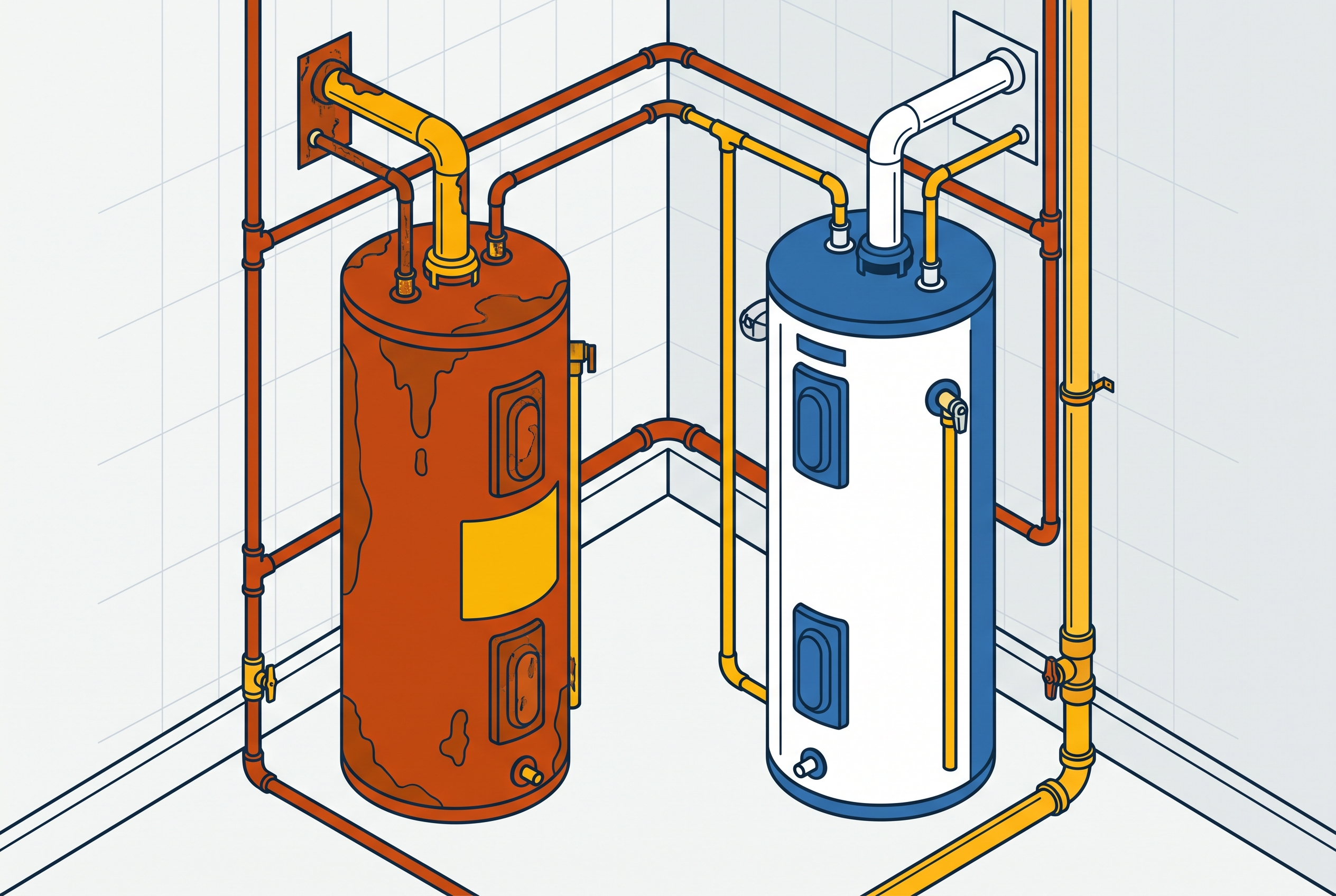
A typical hot water heater replacement cost runs from roughly $874 to $1,765 installed, with an average near $1,293, according to one 2024 cost guide. The final number depends on the type of heater, the labor, your local permit fees, and whether the new unit needs different venting, wiring or piping than the old one. Prices vary by region, so treat every figure here as a ballpark to compare against local quotes.
Here is what goes into a replacement bill, what drives it up, and where you can save.

What a water heater replacement includes
A replacement bill is more than the tank. The heater itself is the biggest line, but installers also charge for labor, many towns require a permit, and the old unit has to be drained, disconnected and hauled away. Bob Vila’s 2024 cost guide gives these ranges for a standard swap:
- Labor: about $150 to $450 for a standard water heater replacement. Converting from a tank to a tankless unit can run up to $2,500 in labor.
- Permit: about $25 to $300, with another $50 to $300 if a natural gas line has to be installed.
- Removal of the old unit: about $100 to $500.
The same guide puts tank heaters at about $1,000 on average and tankless models at about $2,500 on average, which fits the general pattern the Department of Energy describes: storage heaters have a lower purchase cost than tankless ones.
What pushes the price up
The biggest swings come from changing something about how the heater connects to your house. The Department of Energy notes that switching fuels can add costs such as adding a breaker, running a gas line to the heater and venting it outside. Bob Vila’s guide puts numbers on those extras:
- Electrical wiring: about $550 to $2,300.
- Water line changes: about $350 to $1,900.
- Gas line: about $275 to $825. Converting from gas to electric can add $500 to $1,000 or more.
- Power-vent models cost about $300 to $600 more than direct-vent models, plus about $300 to $500 for extra wiring and electrical work.
- An expansion tank: about $40 to $350.
Home Depot’s buying guide adds that tankless units have a higher upfront cost and may need electrical upgrades in older homes, and that hybrid (heat pump) units cost more to install than standard electric or gas units. Our guide to tank vs. tankless water heaters compares the two in more detail.
Size and type change the bill
A bigger tank or a higher-capacity model costs more, so don’t buy more than you need. Matching the first hour rating to your peak hour is the way to avoid overspending, and our guide to water heater sizes walks through how to do it. The cheapest option up front is usually a like-for-like replacement: same fuel, same size, same vent, so there is nothing to change except the tank.
Replace or repair?
The Department of Energy lists a typical storage water heater lifespan of 10 to 15 years. If yours is in that range and leaking from the tank, replacement is usually the answer, since a leak from the tank itself generally means the tank has failed. If it’s younger, or the problem is a thermostat, an element or a pilot assembly, a repair is often cheaper. Our guides on the anode rod and how long water heaters last help you judge where yours stands. If you’re not sure of the age, read the serial number to find out.
Running costs matter too
The Department of Energy says the average household spends about $400 to $600 a year on water heating, roughly 14% to 18% of the utility bill. It also says an electric heat pump water heater is typically more energy efficient than an electric conventional storage water heater. A more efficient model can cost more up front, so compare the annual operating cost on the EnergyGuide label with the price difference. The Department of Energy suggests contacting your utility for current fuel rates.
How to keep the cost down
- Get at least two or three written quotes, and ask each to itemize the unit, labor, permit, removal and any extras.
- Keep the same fuel and vent type if the old heater is working well with them.
- Ask whether the quote includes the permit and disposal.
- Maintain the new heater from day one. See our guide to how to flush a water heater.
What you can do yourself vs. when to call a pro
| Safe for most homeowners | Call a licensed plumber or electrician |
|---|---|
| Gather quotes and ask for itemized prices | Disconnecting and connecting gas lines or vent pipes |
| Check the old heater’s age and rating plate | Any electrical wiring, breaker or circuit work |
| Compare EnergyGuide operating costs between models | Changing fuel type or moving to a tankless unit |
| Turn off the heater and shut the water if it is leaking | Installing a new water line or expansion tank |
| Ask your utility for current fuel rates | Pulling permits and getting the work inspected |
Safety first. Never try to replace a gas water heater yourself unless you are qualified. Gas lines and vents have to be done right: a leak can cause fire, and a bad vent can release carbon monoxide, which you can’t see or smell. If your tank is leaking, shut off the power or gas and the cold water supply to the heater, and call a pro. If you smell gas, leave the house and call your gas utility or emergency services from outside.
Frequently asked questions
How much does a water heater replacement cost?
One 2024 cost guide reports a range of about $874 to $1,765, with a national average of about $1,293 for a standard replacement. Costs vary by region, heater type and what the install requires, so get local quotes.
Is it cheaper to repair or replace a water heater?
It depends on age and the problem. The Department of Energy lists a storage heater lifespan of 10 to 15 years. A leaking tank means replacement, while a failed part on a younger heater is often worth repairing.
Why is a tankless water heater more expensive to install?
The same cost guide reports labor of up to $2,500 to convert from a tank to a tankless unit, and Home Depot notes a higher upfront cost and possible electrical upgrades in older homes. Venting, gas line sizing and wiring often change.
Sources
- Bob Vila, Water Heater Replacement Cost (last updated April 2024)
- U.S. Department of Energy, Selecting a New Water Heater
- U.S. Department of Energy, Storage water heater overview (lifespan, annual water heating costs)
- The Home Depot, Types of Water Heaters: Electric vs. Gas (buying guide)